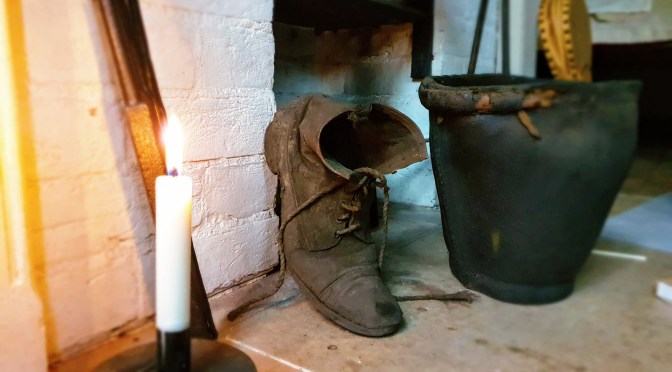
The secrets waiting within the walls of our domestic spaces are often not unearthed until renovation works bring these mysterious items into the light of a new day – and often a new century.
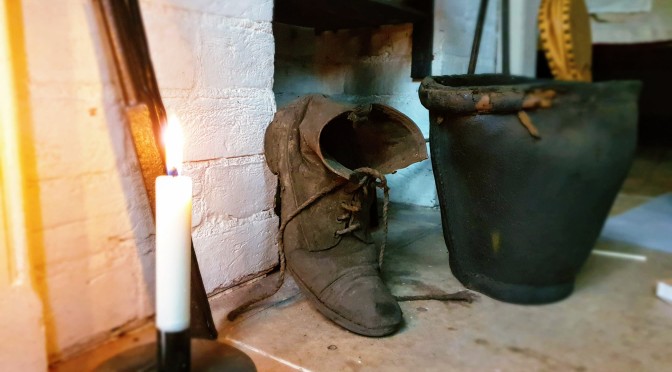
During extensive renovation works at Museum of the Home, one such secret was uncovered.
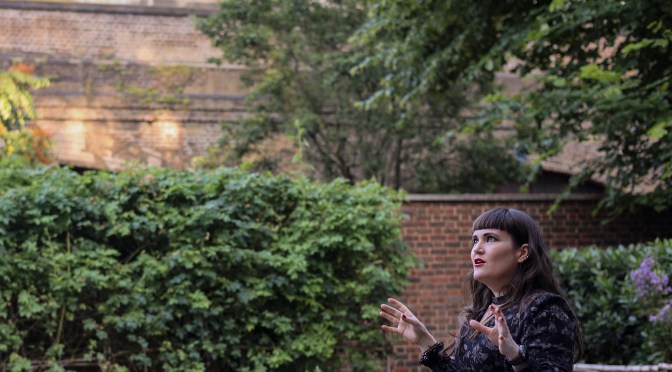
Join Dr Romany Reagan and Kerry Lemon for an exclusive after-hours event at the Museum of the Home, followed by a group walk to Ruup & Form for an intimate viewing of SIMPLING led by the artist. We’ll begin in the herb gardens at the Museum of the Home, where there will be a wine reception and access to explore the Gardens Through Time after hours. Then Romany will give a talk exploring the roots of women-led fertility management through the lens of herbal history. We’ll uncover the often-overlooked practices of mediaeval and early modern healers — women who passed down their knowledge orally, from mother to daughter, from midwife to apprentice. Their methods of community care were rarely recorded in written form, so uncovering these methods of reproductive control are their most secret knowledge of all.
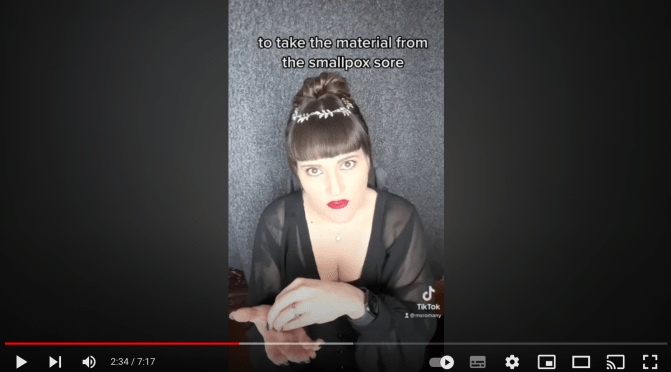
When we think of the eradication of the smallpox disease today, we think of the groundbreaking vaccine developed by Dr Jenner — but where did the original knowledge of smallpox inoculation (the knowledge on which the eventual vaccine was based) come from? We actually owe our thanks to the ancient practices kept alive by women healers in Greece, Turkey, China, India, and Africa. Basically, everywhere in the world *except* Western Europe…
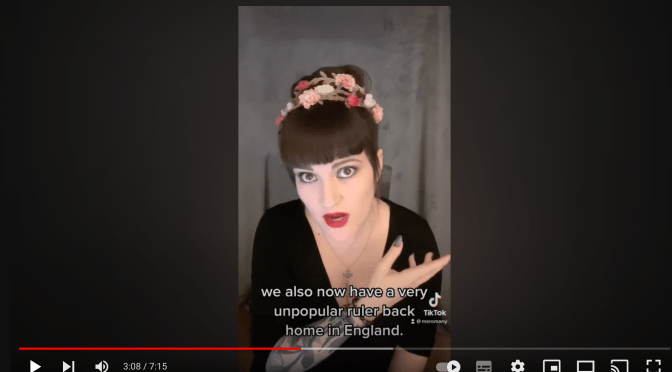
In this video, I explain how the chaos of the English Civil War led to relaxed print censorship, increased literacy, and a boom time for female-focused medical books — the origin of the printed family herbal book.
In this short history, I pinpoint the exact year in mediaeval Europe when the idea of the inherent character of the Satanic witch as female began — and also explain how the blame for this misogynist bull really comes down to just a few travelling preachers.
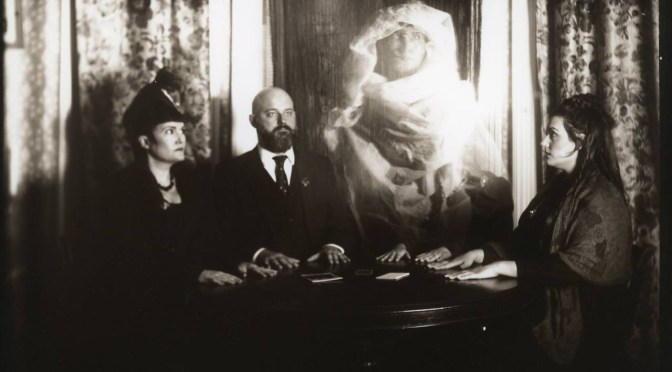
Last October 2021, we gathered some friends, historians, a museum curator, and fellow spectrophiles to run an experiment at the Museum of the Home in London. We wanted to see if we could recreate spirit photographs using historically accurate Victorian methods.
This post contains three parts. First, a short history of spirit photography. Second, an interview with our photographer Selina Mayer. And finally, our Spirit Photography Album with the outcomes of the experiment.
***If you want to skip straight to our Spirit Photography Album first, scroll to the bottom of this post.***
Throughout history, using legend and lore, we have sought to understand this night-time adventure. Witches have been condemned as the conjurers of nightmare sleep paralysis and faeries blamed for time loss or sleep-walking; we convince ourselves that ghostly spirits visit us at night with messages of hope or portents of danger.
The Nightmare by Henry Fuseli, 1781
In this illustrated lecture, Dr Romany Reagan will explore the creatures and meanings that fill our dreamscapes, from mediaeval British horrors to 19th-century curiosities and theories—and how these nocturnal happenings can play out in our waking lives.
Dr. Romany Reagan is an Arts Council England-funded research fellow with Museum of the Home, studying the hidden histories of women in Science, Technology, Engineering and Mathematics, from mediaeval cunning women and herbal witchcraft to 19th-century feminist botany. Her research has explored the layers of heritage within Abney Park cemetery and an occult literary heritage of London’s Stoke Newington area, as well as ‘earth mystery’, psychogeography and folklore, legends and lore from the British Isles.
This event is part of the Museum of the Home’s Festival of Sleep, running from June through September 2022.
October is a time to prepare the home for the coming winter, to lay down stores and tend to our inner life and Halloween marks the beginning of these preparations.
Join us as we discover how contemporary magical practitioners prepare their homes for Winter.
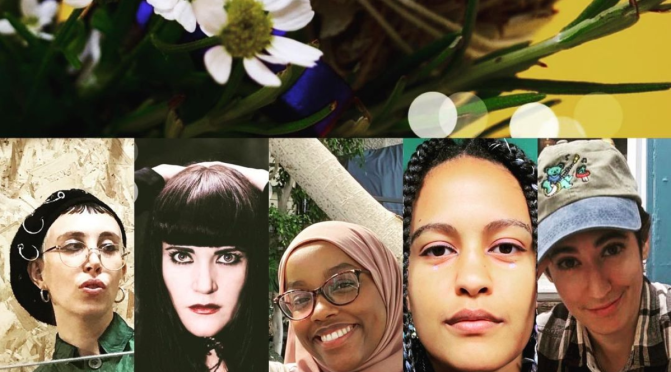
Enjoy a glass of mulled wine as we learn from the lived experiences of several contemporary practitioners who offer unique perspectives on their private rituals for safety, warmth, and protection in their magical homes.
Everyone can identify with the desire to protect our homes. Today, we might use alarm systems or family dogs to keep our domestic spaces safe from human predators, but our ancestors’ fears weren’t only for these terrestrial threats—they felt that their homes could come under attack from unseen forces as well.
The following is an excerpt from a talk I gave at the Museum of the Home (formerly the Geffrye Museum) in November 2019, ‘Witch Bottles & Worn Shoes: Home Protection Folklore Practices’.