
Category Archives: Botany

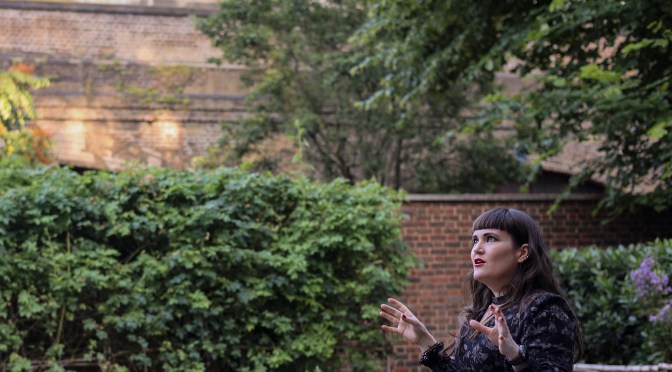
Live talk at the Museum of the Home in London, Thursday 12th June 2025, 6:30pm: ‘Ancient Herbal Remedies & Fertility Management — The Secrets of Mediaeval & Early Modern Midwives’
*** Buy tickets here!!! ***

Join Dr Romany Reagan and Kerry Lemon for an exclusive after-hours event at the Museum of the Home, followed by a group walk to Ruup & Form for an intimate viewing of SIMPLING led by the artist. We’ll begin in the herb gardens at the Museum of the Home, where there will be a wine reception and access to explore the Gardens Through Time after hours. Then Romany will give a talk exploring the roots of women-led fertility management through the lens of herbal history. We’ll uncover the often-overlooked practices of mediaeval and early modern healers — women who passed down their knowledge orally, from mother to daughter, from midwife to apprentice. Their methods of community care were rarely recorded in written form, so uncovering these methods of reproductive control are their most secret knowledge of all.

Continue reading Live talk at the Museum of the Home in London, Thursday 12th June 2025, 6:30pm: ‘Ancient Herbal Remedies & Fertility Management — The Secrets of Mediaeval & Early Modern Midwives’

What does the English Civil War have to do with feminist medicine?

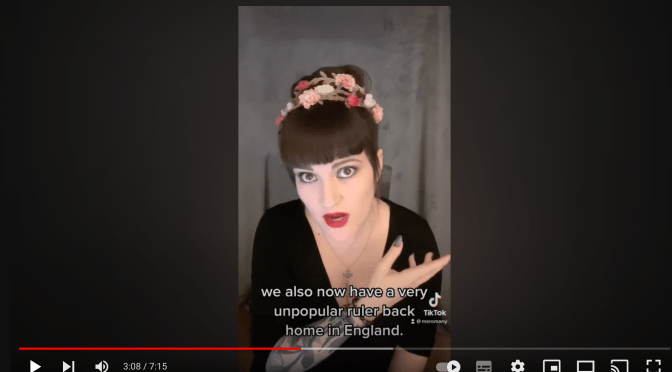
In this video, I explain how the chaos of the English Civil War led to relaxed print censorship, increased literacy, and a boom time for female-focused medical books — the origin of the printed family herbal book. 

‘Women’s Weeds’ Research Journal — VIDEO: Exploitation of 17th & 18th Century Folk Healers by the Professionalised Medical Community

A potted history of the exploitation of folk healers in Europe, as well as in conquered lands (the Americas, West Indies), in the 17th & 18th century by the professionalised medical community—with a special focus on how this impacted female folk healers.

‘Women’s Weeds’ Research Journal — Spotlight: Beatrix Potter Takes on the Botanical Boys Club

“I fancy he may be something of a misogynist.” 
— Beatrix Potter, in her journal December 1896, about Mr Thiselton-Dyer Director, Kew

Several years before Miss Helen Beatrix Potter (1866-1943) became the beloved children’s author whom we all treasure, creating the world of Peter Rabbit and Mrs Tiggy-Winkle, she had much smaller lifeforms on her mind: fungi. And there was a man (or rather, several men) standing in her way to mycorrhizal greatness. One of whom was no less of a personage than William Turner Thiselton-Dyer, Director of the Royal Botanic Gardens, Kew.

It all began with her illustrations. She was a very talented artist, in both sketch and watercolour, but alongside this ability she also had the gift of very close observation. Beatrix sketched and painted a variety of fungi that she found in the Lake District in England and in Scotland. As her documentation became more detailed, she began to be fascinated by how fungi reproduced. By the autumn and winter of 1895, when she was 29 years old, she was spending an increasing amount of time drawing fungi under a microscope. She became convinced that she could germinate some spores herself. She wanted to study the environment in which they germinated, discover whether or not conditions were the same for each species, what the spawn of each consisted of, and whether or not she could reproduce it more than once. This is where her hobby graduated from observation to experimentation. 

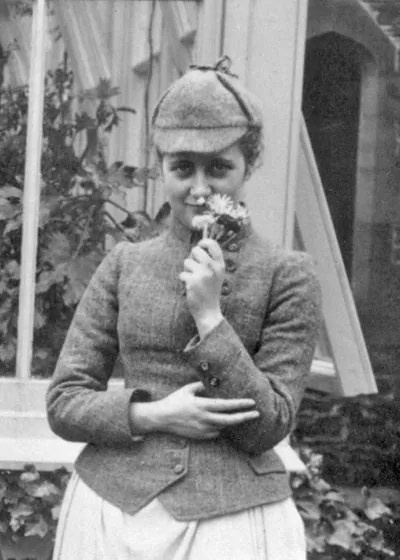
Beatrix Potter
Continue reading ‘Women’s Weeds’ Research Journal — Spotlight: Beatrix Potter Takes on the Botanical Boys Club