Ah, the archive… That reliquary of truth and unbiased historical fact.
This week’s ‘fun fact’ is one of those research moments when another researcher points out a solution to your problem that actually should have been obvious from the beginning: if you’re looking for hidden histories, do not look at ‘official’ records, such as those kept by licensing guilds or at published works, nope. Look at court documents. Fines, punishments, incarcerations—executions. That is where you are going to find the true stories of what historical people—who were not White Christian Men (WCM)—were actually up to.
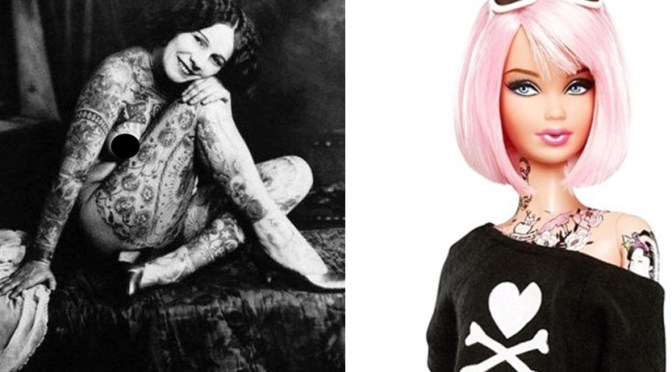
Everyone knows: tattoos are for convicts, prostitutes, and drunken sailors. Any woman who dares get one is destined to live fast and die young. Harlots of the saucest degree. Her only job prospects are the circus sideshow or a biker’s Old Lady.
Or so we think…
Tattooed women have meant many things over the past several hundred years that have nothing to do these stereotypes: an emblem of the aristocracy, an unlikely international impulse towards sisterhood, and a mark of feminism.
But before I dive into what the tattoo is, let’s explore what it is not. Debunking myths is, to me, one of the most thrilling aspects of historical research. So here we go…
Now considered a cloying cliché to be rejected by the modern feminist, the fascination with flowers and, in turn, a desire for a flowery aesthetic, was not initially about dainty innocence but instead showed evidence of a scientific mind. What follows here is what I’ve discovered about the connection between flowers and women.