Tattooed Ladies: Between Myth & Truth, from Burma to Barbie, the Feminist Evolution of ‘Monster Beauty’

Everyone knows: tattoos are for convicts, prostitutes, and drunken sailors. Any woman who dares get one is destined to live fast ahttps://blackthornandstone.com/2020/11/12/tattooed-ladies-between-myth-truth-from-burma-to-barbie-the-feminist-evolution-of-monster-beauty/nd die young. Harlots of the saucest degree. Her only job prospects are the circus sideshow or a biker’s Old Lady.
Or so we think…
Tattooed women have meant many things over the past several hundred years that have nothing to do these stereotypes: an emblem of the aristocracy, an unlikely international impulse towards sisterhood, and a mark of feminism.
But before I dive into what the tattoo is, let’s explore what it is not. Debunking myths is, to me, one of the most thrilling aspects of historical research. So here we go...
The Language of Flowers: Breaking into the Boys Club of Botany & the Flowery Dress as a Feminist Act

In the 18th and 19th centuries, one of the few branches of scientific study that was considered within the purview of ‘ladylike’ pursuits was the study of botany and its attending botanical illustrations. This led to many women becoming quite familiar with organic and botanical images and adept at their creation. Bringing these botanical images into home decoration and personal dress was a natural progression for some of these women, which led to the fashion of flowered and foliaged dresses and wallpaper.
Who Is the Horned God? A Journey from Ancient Deer Goddess Cult to Pop Culture
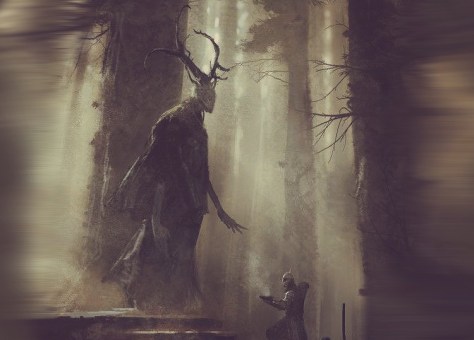
The Horned God is a popular image today, from neo-pagan traditions to pop culture. But who is he? And is he really a he? Follow me down this rabbit hole, as I show the journey of the Horned God from ancient feminist Deer Goddess, to Cernunnos—taking a detour by way of Shakespeare, Brothers Grimm, and Victorian Gothic fiction—to a 20th century mock-historical Wiccan fantasy revival and 21st century pop icon.
This timeline is serpentine. I’ve done my best to not take the juicy side fruits tempting me off onto splintering paths into Dante’s infernal harlequin demons or even into the Templar’s Baphomet—all of which would’ve been valid roads that this bizarre tale could travel, but I want to focus this story on something more primal to who we are as humans.
The idea of a forest God—or I should say Goddess—is where we’ll begin.
 Blackthorn & Stone